


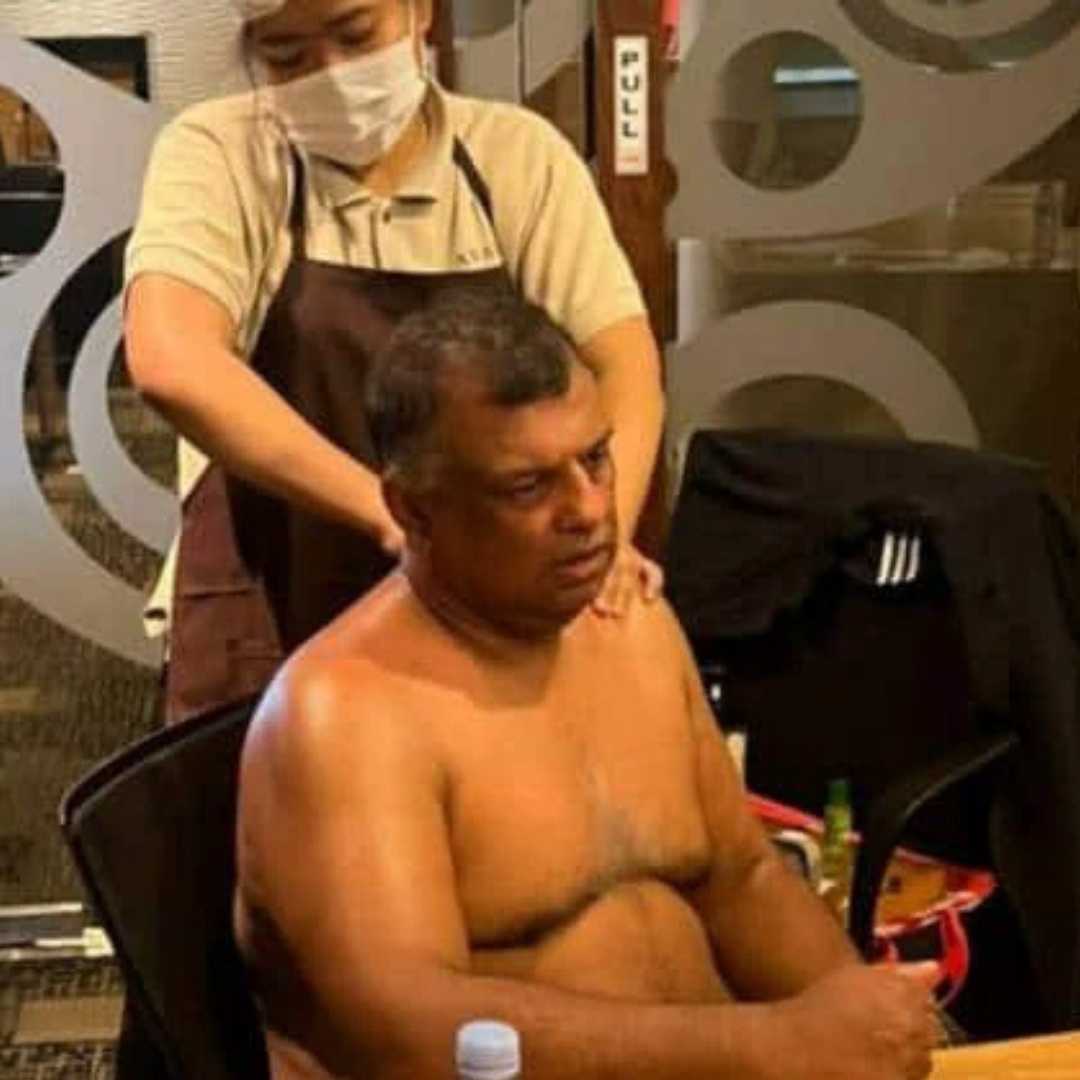
In the world of business, it’s not uncommon for corporate leaders to make headlines, but AirAsia’s CEO, Tony Fernandes, recently found himself in the midst of a social media storm. The cause of this uproar was a picture he shared on LinkedIn during a management meeting that captured a shirtless Fernandes receiving a massage. While his initial post praised the company’s work culture, the controversy that ensued has sparked a broader conversation about professional propriety and the influence of social media.
A LinkedIn Post Gone Awry
Tony Fernandes, the 59-year-old CEO of AirAsia, made waves when he decided to share a picture of himself receiving a massage during a virtual management meeting on LinkedIn. In the post, Fernandes lauded the work culture at AirAsia, suggesting that it was this culture that allowed him to multitask in such a unique manner.
However, the post quickly became a lightning rod for criticism. Many felt that such an image was unbecoming of a corporate leader, questioning the professionalism and decorum of the setting. In response to the mounting backlash, Fernandes ultimately deleted the post, but not before the controversy had captured the attention of social media users and the wider public.
A Veiled Response on LinkedIn
In the aftermath of the controversy, Tony Fernandes opted not to address it directly but instead made a subtle reference in his latest LinkedIn post. He alluded to “all the attention” he received while thanking his employees for organizing an outdoor barbecue at the office.
“Busy day. After all the attention I got and with so much positive stuff going on decided to stay at the office. Allstars did a special Outdoor BBQ for me,” Fernandes wrote, indirectly acknowledging the recent events.
The Broader Conversation
This incident involving Tony Fernandes has opened up a dialogue about the expectations of professionalism and conduct for corporate leaders in the age of social media. It raises questions about the boundaries between work and personal life, and how leaders should navigate them, especially in public forums like LinkedIn.
As businesses evolve, so do the expectations placed on their leaders. The incident serves as a reminder of the scrutiny and responsibilities that come with high-profile positions, and it underscores the potential impact of social media on an individual’s public image.