


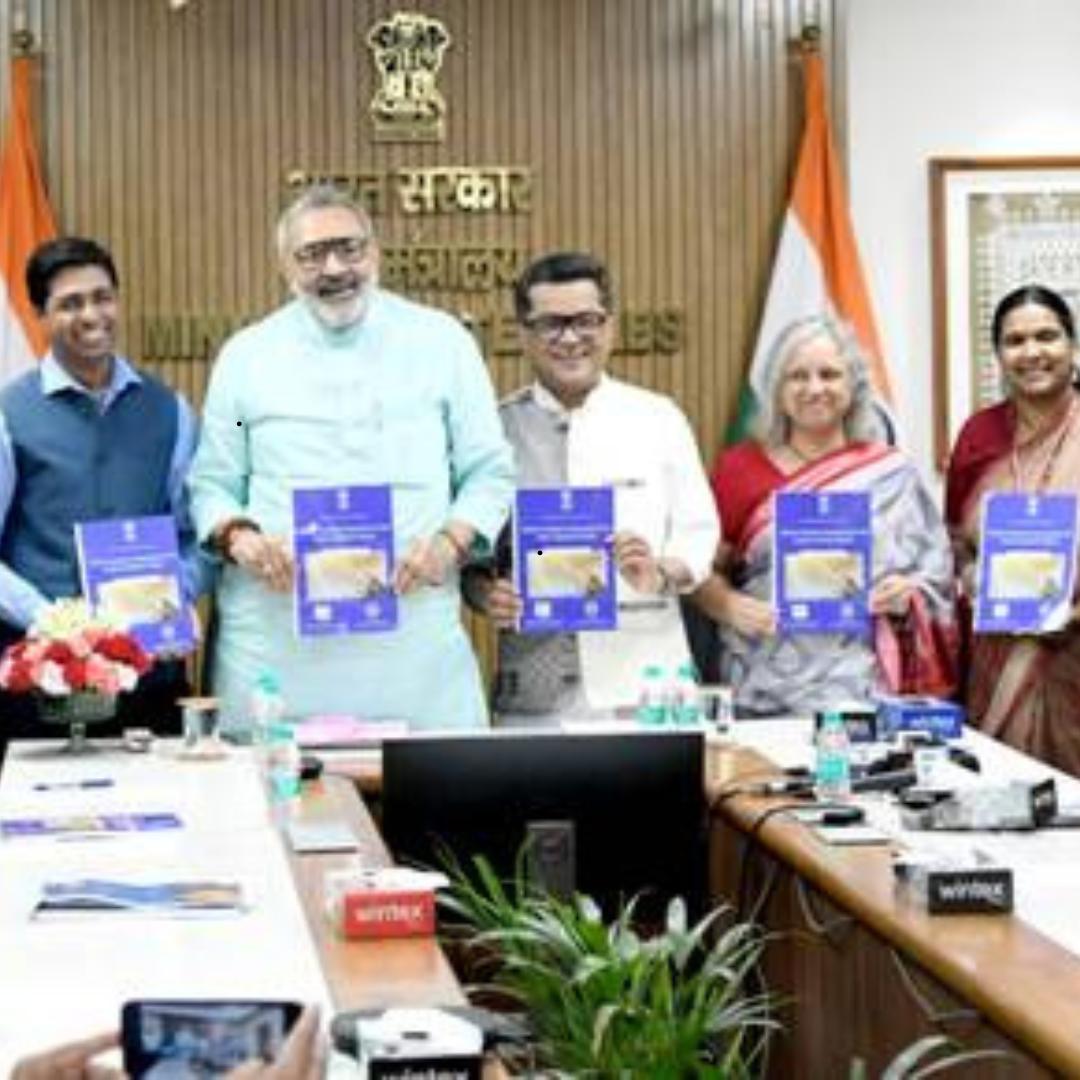
The Ministry of Textiles, in collaboration with IIT Delhi, has released a pioneering guide to assess and reduce the carbon footprint in the handloom sector, reinforcing India’s commitment to eco-friendly production, sustainable fashion, and the preservation of cultural heritage.
Highlights
- Book Title: Carbon Footprint Assessment in the Indian Handloom Sector: Methods and Case Studies
- Launch by: Shri Giriraj Singh, Union Minister of Textiles
- Prepared by: Office of Development Commissioner for Handlooms and IIT Delhi
- Focus: Practical tools to measure and reduce carbon footprint in handloom production
- Coverage: Case studies on cotton bedsheets, Ikat sarees, Banarasi sarees, floor mats, and more
- Stakeholders: Collaboration with weavers, industry experts, service centres, and government agencies
- Goal: Promote sustainable, eco-friendly, and globally competitive handloom products
Union Minister of Textiles, Shri Giriraj Singh, today unveiled the book “Carbon Footprint Assessment in the Indian Handloom Sector: Methods and Case Studies” in New Delhi. Co-created by the Office of Development Commissioner for Handlooms, Ministry of Textiles, and IIT Delhi’s Department of Textiles & Fibre Engineering, it offers a clear, practical guide to evaluating and reducing the handloom sector’s environmental impact.
The handloom sector employs over 35 lakh individuals, including 25 lakh women, making it a cornerstone of rural livelihoods and women’s empowerment. Known for minimal power usage, low capital needs, and eco-friendly production, handloom weaving remains one of India’s richest cultural traditions and a significant contributor to sustainable fashion.
The book details simple carbon footprint measurement methods supported by real-world case studies on iconic handloom products such as cotton bedsheets, floor mats, Ikat sarees, and Banarasi sarees. It also outlines low-cost data collection and emission tracking systems tailored to the unique realities of handloom production.
This publication is the result of extensive collaboration between government bodies, IIT Delhi, Indian Institute of Handloom Technology, Weavers Service Centres, grassroots weaving groups, Greenstitch Pvt. Ltd., and other stakeholders. The methodologies align with global climate reporting standards but are customised for India’s operational context, enabling handloom producers to adopt greener, more resilient practices.
The Ministry of Textiles has urged industry stakeholders, researchers, and the public to use and promote the findings of this report as an important step toward making India’s handloom sector a global leader in sustainable textiles.