


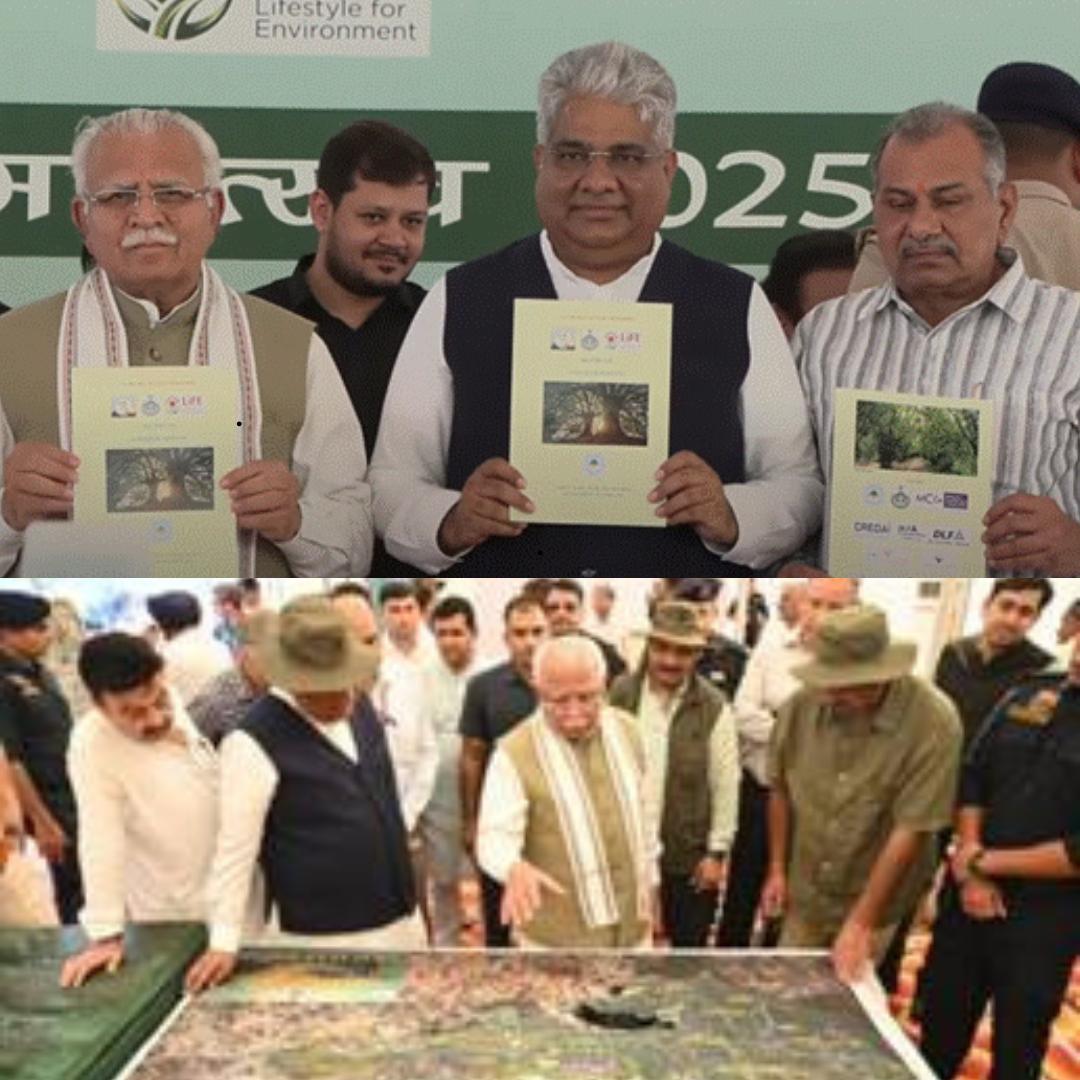
Union Ministers Bhupender Yadav and Manohar Lal inaugurated the transformative ‘Matri Van’ project under the ‘Ek Ped Maa Ke Naam’ campaign, with the goal of developing 750 acres in the Aravalli Hills into a vibrant, theme-based urban forest that promotes sustainability, enhances biodiversity, and supports public well-being through inclusive, community-led green initiatives.
✨ Highlights:
- Launched under: Ek Ped Maa Ke Naam Programme
- Venue: Gurugram, Haryana | Occasion: Van Mahotsav 2025
- Area: 750 acres in Aravalli Hills along Gurugram-Faridabad Road
- Purpose: Urban forest for biodiversity, climate resilience & community wellness
- Key Figures: Union Ministers Bhupender Yadav and Manohar Lal
- Key Features:
- Theme-based plantation groves
- Nature trails, yoga areas, butterfly garden
- Eco-infrastructure: cycle tracks, water bodies, misting systems
- Community-driven model: Involves CSR partners, RWAs, schools, NGOs, MNCs
In a major move toward ecological sustainability and urban greening, Union Environment Minister Shri Bhupender Yadav and Union Minister for Housing, Urban Affairs and Power Shri Manohar Lal jointly launched the ‘Matri Van’ initiative in Gurugram today. Held during Van Mahotsav 2025, the event—organized by Haryana’s Forest Department—advances the ‘Ek Ped Maa Ke Naam’ campaign, inspired by Prime Minister Narendra Modi’s vision.
‘Matri Van’ will be developed across 750 acres in the Aravalli Hill region along the Gurugram-Faridabad Road. Designed as a theme-based urban forest, the initiative will play a pivotal role in enhancing biodiversity, carbon sequestration, and urban well-being, serving as the green lungs for Delhi NCR.
Addressing the gathering, Shri Manohar Lal emphasized that reducing carbon emissions is a top global priority. He encouraged citizens to become Van Mitras by adopting tree plantation traditions, praising India’s achievement of 50% renewable energy in its power mix. He also advocated for eco-tourism, green buildings, and biodiversity parks, especially in cities like Gurugram.
Shri Bhupender Yadav, in his address, highlighted the importance of the project in transforming currently barren land into a thriving forest ecosystem with native Aravalli species. Calling it a “heart and lung of Delhi NCR,” he stressed the role of Matri Van in offering citizens — both young and old — a serene, health-promoting environment. He further linked the initiative to Mission LiFE, focusing on saving resources and living sustainably.
The project will involve multi-stakeholder collaboration, including CSR entities, RWAs, NGOs, MNCs, school children, and government organizations. Planned ecological components include the removal of invasive bushes like Kabuli Kikar and large-scale plantation of native trees such as Bargad, Peepal, Neem, Amaltash, Pilkhan, and Bamboo.
Theme-based groves in the Matri Van include:
- Bodhi Vatika – Grove of spiritual trees like Bargad, Peepal
- Bamboosetum – Various bamboo species
- Pushp Vatika – Flowering trees
- Sugandh Vatika – Fragrant plant species
- Medicinal Plants Vatika, Nakshatra Vatika, Rashi Vatika, Cactus Garden, Butterfly Garden
Additional features:
- Nature trails, cycle tracks, yoga spaces, gazebos
- Waterbodies for conservation and flood control
- Treated water irrigation, misting and sprinkling systems
- Parking and public facilities at key access points
Earlier in the day, ministers also reviewed the Aravalli Jungle Safari Park and participated in sapling plantations at IMT Manesar, where five locations were prepared by HSIIDC.
The ‘Matri Van’ initiative is not just a green space; it is a symbol of India’s ecological vision, combining cultural values, environmental science, and community engagement to ensure a healthier, greener future for all.